
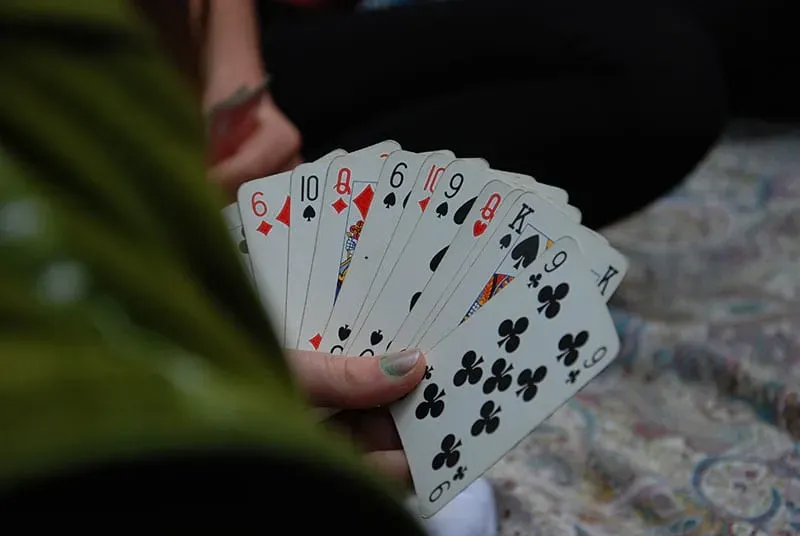
Pinnacolo: definition and historical background
Burraco is one of the favourite games of Italians (and not only). With a long tradition, an immense number of variants - more or less well known, more or less compelling - it represents a true cultural heritage for card-game lovers.
To make things more dynamic, it is possible to change the rules, the scoring, the number of players, depending on the tradition in question: from Rummy to Canasta, from Pinella to Pinnacolo.
It is precisely this last game that we will discuss in these pages, presenting curiosities, history, and above all the characteristics that have made this particular version of the game one of the most compelling of all.
Even for those who are not exactly card or board game enthusiasts, Pinnacolo can represent a significant point of interest. Indeed, it is one of those games that, even today, many years after the first historical records, remains among the most widely played in the world.
Among the oldest by tradition, by number of players and by the events that made its name great, let us discover this yet another fascinating variant of Burraco.
Speaking properly of history, when one speaks of Pinnacolo, one is not referring to a simple version of Burraco, as many might incorrectly believe. It is in fact a true ancestor of the famous card game.
Initially it was born as a possible variant of Rummy, a card game that became widely popular in Italy around the 1930s.
During the Second World War it accompanied many soldiers during their rest periods, until changes to the rules meant it was eventually replaced by Canasta. In the second half of the twentieth century it was revived, and variants followed one after another over time, until the “standard” version of Burraco was reached.
As can be gathered from the long history of such a game, Pinnacolo too has its own variants, just as the regular Burraco does. Below are the most important basic rules with which to start playing and having fun with Pinnacolo.
The basic rules of Pinnacolo
As for the game itself, it was structured as follows: one player among the group acts as dealer and distributes 13 cards to each player. The remaining cards are placed face down in the centre of the table, with the first card turned face up, known as the pool. Each player in turn draws a card from the deck to add to their hand.
The objective is to form combinations to lay on the table, as in poker or Scala 40. Players must therefore compose three-of-a-kinds, four-of-a-kinds and runs, provided they consist of a minimum of three cards of the same suit. After this the player must discard a card, placing it in the pool. Cards in the pool can also be drawn by players on subsequent turns.
In any case, what counts for winning the game is closing before the others do - that is, being left without any cards in hand - while trying to lay down cards of greater value, thereby accumulating a higher score. Scores vary from version to version, but generally four-of-a-kinds and runs of 7 cards are worth the most.

Simple and free
Getting started with Burraco on Burraconline is very easy: download and install the free software and join the largest Burraco card game community, with thousands of players!
Download the game!