
Pinnacolo: definition and historical background
Burraco is one of the favourite games of Italians. With a long tradition and an immense number of variants, it represents a true cultural heritage for card-game lovers.
Welcome to the Burraconline blog section. This space is dedicated to news, in-depth articles, events and curiosities from the vast world of Burraco, both online and classic.
Interest in this game has grown exponentially in recent years, partly thanks to online platforms that allow you to play, have fun and relax comfortably at home, through your PC or mobile device.
Many players, however, have remained attached to the game around a table, especially during the summer season. The articles on our blog range from historical considerations about Burraco, game rules, strategies and curiosities on the most varied aspects (including charitable and social ones) relating to Burraco.
If you are a fan of online Burraco, download the game and you can also explore the various aspects of Burraco and meet new people.
For any information or query, do not hesitate to contact us.
Burraco is one of the favourite games of Italians. With a long tradition and an immense number of variants, it represents a true cultural heritage for card-game lovers.

The referee is a fundamental figure in Burraco games and tournaments, the only person officially authorised to supervise, sanction and verify the correct conduct of participants.

Burraco is a popular card game derived from the Pinnacolo family. Its widespread popularity has given rise to federations that regulate both in-person and online tournaments.
Burraco is one of the most popular games in the world. There are countless versions in constant evolution, born of tradition and the desire of players to have fun in alternative ways.

Having fun playing Burraco is easy, but with a good partner it becomes even easier. Choosing a partner who is up to the task is essential, especially in online games.
In Burraco, strategy is the supreme ruler. Discover the most effective strategies: Counter-game, n+1 Rule, Card Exchange, Opponent Compression and much more.
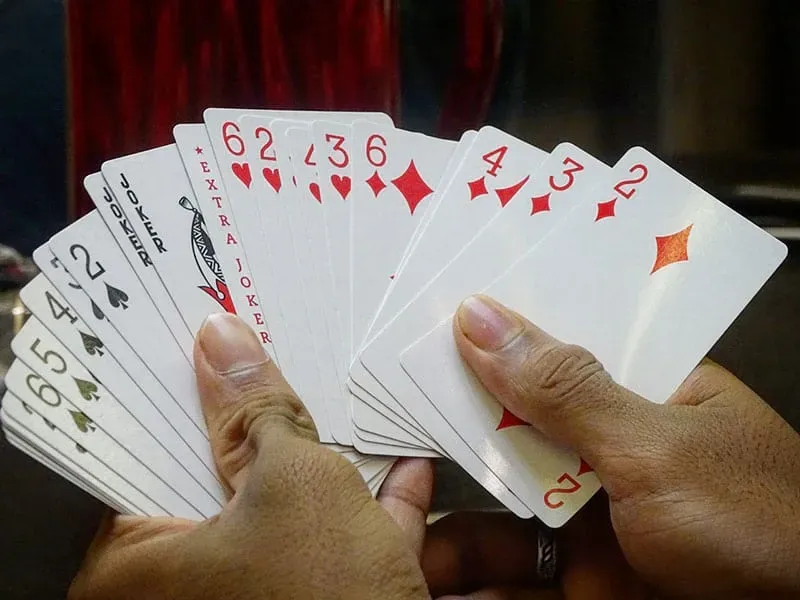
To play Burraco you need to know the specific terms. Runs can be clean, semi-clean or dirty. Since 2008 Fibur has recognised the semi-clean Burraco as a valid combination.
International Burraco is played in almost every country. There are four fundamental differences from the Italian rules that you need to know for official tournaments.
Traditional Burraco involves 4 players, but the 2-player version is very common. Discover the rule differences and especially the strategic differences between the two versions.
In Burraco, strategy plays a fundamental role that can influence the entire course of the game. Discover practical tips for improving your game.
Burraco with 6 players is the perfect version for involving more people. The rules do not differ much from the classic version, but the strategies become much richer.

A card game derived from Pinnacolo, Burraco has won over millions of people. Here is a selection of books useful both for learning the rules and for refining strategies.
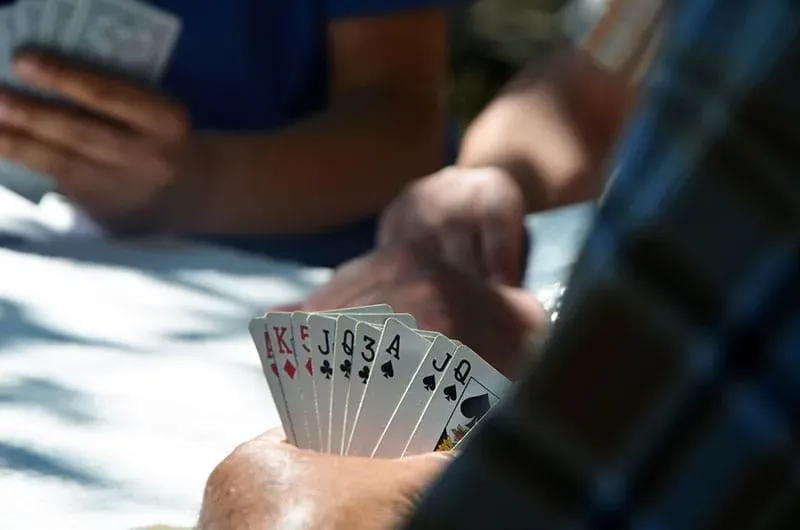
Burraco continues to enthuse a great number of people. It sometimes also becomes an opportunity to do good, through charity tournaments organised by Lions Club, Rotary and other associations.
The four-player version is the most popular form of Burraco. It revolves around cooperation between the two playing pairs, with the ultimate goal of closing without any cards in hand after making a Burraco.
Classic and real Burraco: two variants of the same game with different rules. Classic uses 108 cards with jokers, real uses 104 without jokers. Discover all the differences.
Burraco with three players involves a slightly different dynamic: alliances not established in advance, asymmetric pozzetti and a more unpredictable game than the classic version.
Burraco with 5 players uses three decks of cards, pozzetti of different sizes and alliances that form dynamically during play. A strategic and engaging variant.
Calculating the score in Burraco can seem complicated. This guide explains card values, types of Burraco and their scores, penalties and the tournament table.
Burraco is thought to have originated in Uruguay in the 1940s as a variant of canasta, before spreading to Europe and Italy. Today it involves millions of enthusiasts worldwide.